.avif)
Freevisuals
Male Soccer Player Outplaying Opponents, free stock footage and stock video of a player beating defenders. Download on iStock.
Download FREEDownload NOW!Download On iStock
Skill-focused football footage needs to capture something genuinely difficult to fake convincingly, real technical ability under real match pressure. Male Soccer Player Outplaying The Opposing Players And Scoring A Goal is a wide, low angle tracking shot from iStock showing exactly that, a male football player in a blue outfit outplaying his opponents and scoring a goal, giving editors access to a genuinely skillful, dynamic piece of action footage.
If you're building a broader sports content project around this clip, our related Male Football Team Scoring A Goal and Night Drone Flight Around A Soccer Stadium clips are both worth pairing with this one, and for high energy music suited to fast-paced sports action, Artlist and Epidemic Sound both carry tracks well suited to this kind of content.
Real athletic skill under genuine match conditions has a specific quality, unpredictable movement, real defensive pressure, authentic pacing, that's genuinely difficult to recreate convincingly through choreographed or staged football footage. Male Soccer Player Outplaying The Opposing Players And Scoring A Goal captures this authenticity directly, giving editors access to a genuinely dynamic piece of skill-based action without needing to coordinate an actual match or direct a convincing recreation of real football technique.
This distinction matters considerably for sports-adjacent content specifically, since audiences with genuine football knowledge are often able to spot staged or unconvincing football action relatively easily, technique, footwork, and defensive reactions that don't read as authentic can undermine an otherwise strong piece of content aimed at a sports-literate audience.
Brands selling football boots, apparel, or training equipment can use this clip to convey genuine skill and performance without needing to commission new footage.
Creators producing football analysis or commentary content can use this clip as representative action footage within broader coverage.
Coaching or training-focused content can use this clip to illustrate genuine attacking technique and skill in a real match context.
Content built around themes of individual skill, determination, and achievement benefits from this clip's genuinely earned display of technical ability.
Platforms and creators covering football analysis, predictions, or fantasy sports content can use this clip as representative match action.
Head to the iStock download page and license the clip at your required resolution.
Bring the clip into your project following your specific software's standard media import process.
Position the clip at the specific point in your edit where a dynamic, skill-focused moment is called for.
Adjust the clip's in and out points to match your specific project's pacing needs.
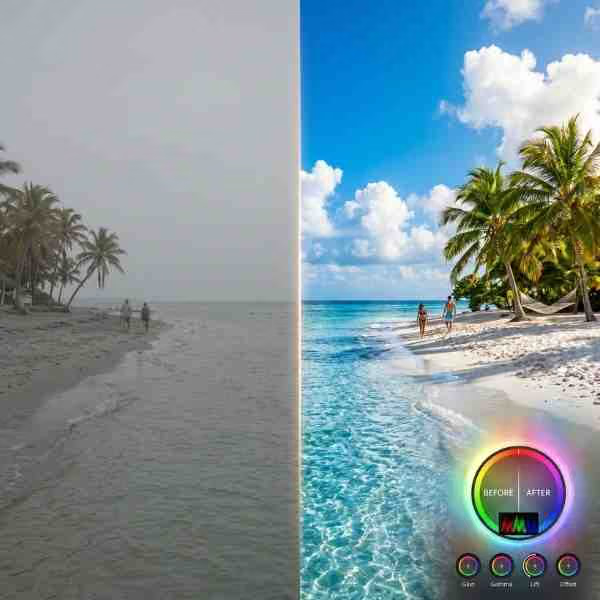
Apply color correction so this clip's tone aligns with the rest of your project if you're combining it with your own original footage.
A speed ramp, accelerating briefly before easing into slow motion right as the goal lands, suits this kind of skill-based action particularly well.
Time a music track's key beat or accent to land as the player completes the skill move or scores.
Add a title, logo, or supporting text above the clip if your specific project calls for it.
Play through your edit to confirm the clip's energy and timing read well within the broader context of your project.
Once you're happy with the result, render and export using your project's standard delivery settings.
A low angle tracking shot, the camera positioned near ground level and moving alongside the action, produces a specific visual effect that a static or raised camera position doesn't achieve, a genuine sense of speed and physical presence, since the low vantage point exaggerates the player's relative size and movement against the background. This is part of why this particular framing choice suits action-focused football content so well, it reinforces the sense of dynamic athletic movement that's central to what this clip is actually showcasing.
Understanding this technical choice helps explain why this specific clip reads as more dynamic and engaging than a wide, static, raised shot of the same action would, even though both would technically capture the same underlying event. The camera's specific movement and positioning is doing genuine work to reinforce the footage's core appeal.
Using the clip without confirming the correct license tier for your intended use. Always confirm your specific licensing covers your actual intended use case, particularly for broadcast or large-scale commercial distribution.
Applying uniform slow motion rather than a considered speed treatment. A speed ramp specifically calibrated to this clip's action tends to read as more professional than a flat, uniform slow motion effect throughout.
Ignoring color consistency with surrounding original footage. If combining with your own footage, mismatched color grading can undermine an otherwise strong sequence.
Placing the clip without genuine context for the skill it showcases. This clip works best when your surrounding content genuinely relates to skill, technique, or football performance specifically.
How To Make Professional Football Edits, Step By Step, a direct walkthrough of editing football action footage professionally, covering pacing and technique directly relevant to using a clip like this one well.
Since skill-focused action footage like this one is broadly reusable across many different football and sports content projects, it's worth treating this specific clip as part of a small personal library of football footage rather than a single-use asset. Pairing it consistently with the other clips in this same collection, the team celebration clip and the stadium drone footage, gives you a genuinely varied set of options for building a complete football-themed sequence covering action, celebration, and establishing atmosphere together.
This kind of complementary clip pairing tends to produce a considerably more professionally structured final edit than relying on a single clip in isolation, since a complete sports sequence typically benefits from a genuine range of shot types working together rather than repeating a single action beat throughout an entire piece of content.
Beyond a single standalone use, this clip works particularly well as part of a broader skill highlight compilation, a sequence of several similar action clips edited together to showcase a range of technical ability rather than a single isolated moment. Building this kind of compilation requires access to genuinely varied action footage, several distinct clips showing different skills, different players, or different match contexts, rather than repeating the same single clip stretched across a longer runtime.
For creators specifically building this kind of compilation content regularly, sourcing a small library of genuinely varied action clips upfront, rather than searching individually for each new compilation, saves considerable production time across an ongoing content schedule built around this specific format.
Since skill-focused action footage like this one often benefits from supporting commentary or analysis, it's worth considering whether your specific project calls for a voiceover explaining the technique on display, rather than relying purely on visual footage and music. A brief technical breakdown, even a few seconds highlighting the specific move or decision that made the play successful, adds genuine educational value for sports-literate audiences specifically interested in the technical side of the game.
For projects without a live presenter available, an AI-generated voiceover through a tool like ElevenLabs can provide this kind of supporting narration efficiently, though genuine subject matter expertise in the actual commentary content matters more than the specific voice technology used to deliver it, since inaccurate or generic commentary can undermine credibility with an audience that genuinely understands the sport and its specific technical nuances.
It's worth being honest about the genuine tradeoff a licensed stock clip like this one represents compared to filming original football footage. Capturing genuinely skillful, well-composed football action requires either access to skilled players willing to perform specific moves on camera, or the patience to capture a genuine moment of skill during actual match play, both considerably more time-intensive than licensing an already-captured clip. This tradeoff tends to favor stock footage for most projects where the specific identity of the player featured doesn't matter to the final content, reserving original filming for projects specifically built around a particular team, player, or sponsored athlete.
Since this clip features an identifiable player, iStock's standard licensing typically covers editorial and commercial use where a proper model release has been secured from the featured talent, a detail worth understanding before assuming unrestricted use across every possible context. Most standard royalty-free footage from major stock libraries like iStock includes this coverage by default, but it's worth confirming directly on the specific listing for use cases with heightened sensitivity, political advertising, health and wellness claims, or any context where a featured individual's specific likeness carries additional legal weight.
This is a genuinely easy detail to overlook when licensing feels as simple as a single purchase, but understanding what a standard royalty-free license does and doesn't cover protects both your project and the individual appearing in the footage, particularly for commercial campaigns where the specific context of use matters more than it might for simple editorial or personal content.
As a body of licensed stock footage grows across multiple projects and platforms, it becomes genuinely valuable to keep a simple record of which specific clips have been licensed, under which license tier, and for which specific projects, rather than relying purely on memory once a footage library grows into dozens or hundreds of individual licensed assets. A basic spreadsheet tracking clip source, license type, and intended use case helps avoid both licensing confusion and the frustration of forgetting a specific clip's existing coverage when a new project comes up that could reuse it.
This kind of light organizational habit becomes particularly valuable for businesses or agencies managing footage across multiple client projects simultaneously, where confusing one project's specific license coverage with another's could create a genuine compliance issue. Treating stock footage licensing with the same organizational rigor as any other business asset helps avoid this kind of avoidable confusion as a footage library continues to grow over time.
For businesses specifically weighing whether to license stock football footage against commissioning original filming, it's worth understanding the genuine cost and time tradeoff involved. Capturing genuinely skillful, well-composed action footage requires either access to skilled players willing to perform specific moves on camera, or the patience to capture a real moment of skill during actual match play, both considerably more time-intensive and expensive than licensing an already-captured clip. Licensing a clip like this one sidesteps that production overhead entirely for a single licensing fee.
This calculation shifts somewhat for larger brands or campaigns specifically built around a unique, ownable piece of content tied to a sponsored athlete or specific team, where the specific identity of the player featured matters enough to justify original production. For the broader range of marketing and content use cases where generic, high-quality skill-based action serves the purpose just as well, stock footage like this one remains the more efficient and accessible choice.
No, it requires licensing through iStock's standard royalty-free terms.
Check the specific iStock listing for the full range of available resolution and format options.
Check the specific license tier on iStock to confirm coverage for your intended commercial use case, including broadcast if relevant.
Check the specific iStock listing for confirmed audio details, and consider pairing with your own licensed music track regardless.
Yes, a speed ramp accelerating briefly before easing into slow motion right at the goal suits this kind of skill-based action particularly well.
Yes, though be sure to match color grading between this clip and your own footage for a cohesive final result.
Affiliate Disclosure: This post may contain affiliate links. If you make a purchase through one of these links, FreeVisuals may earn a commission at no extra cost to you. We only recommend products and platforms we genuinely believe in. Read our full disclosure policy.

Download free video templates, LUTs, and presets for Premiere Pro, After Effects, DaVinci Resolve, CapCut, and Final Cut Pro.
.jpg)