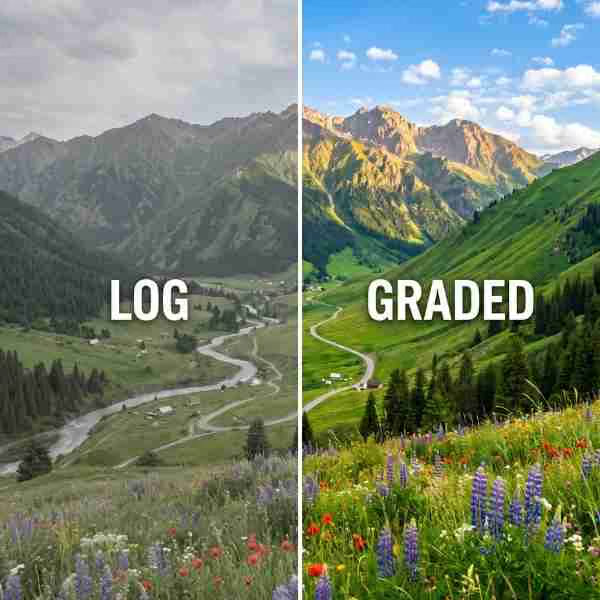
.avif)
Freevisuals
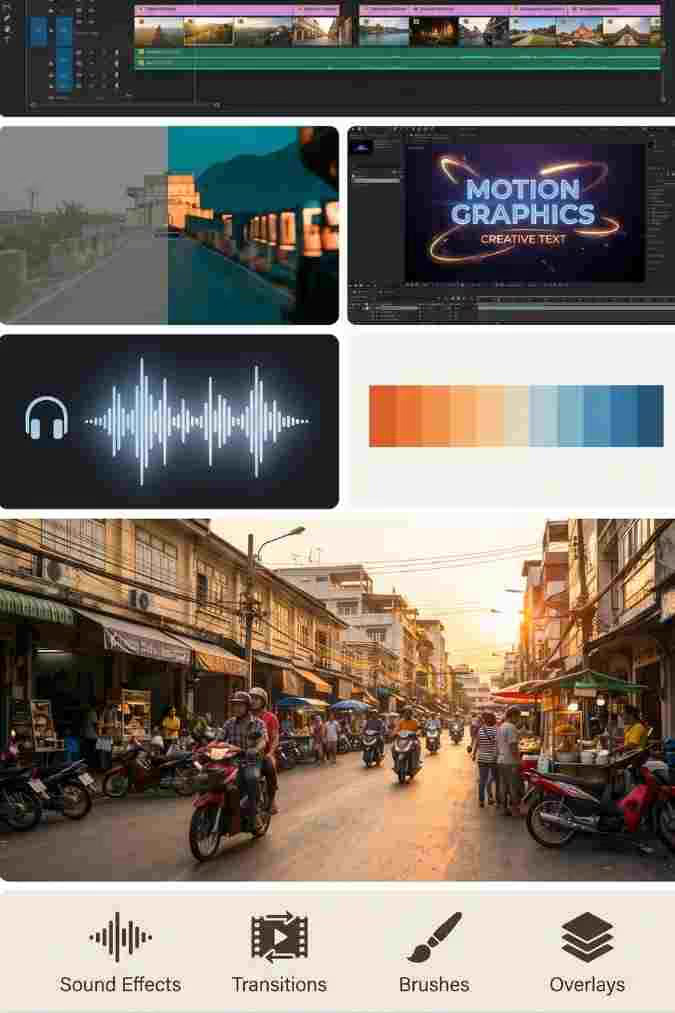
50 warm-toned LUTs across 5 styles - Golden Hour Glow, Cozy Cafe, Autumn Foliage, Sunset Beach & more. For Premiere, Resolve, FCP & After Effects.
Download FREEGo Pro To DownloadDownload NOW!Not every popular color grade relies on contrast. Where our Cinematic Teal & Orange Pro Collection works by pushing shadows and highlights in opposite directions, there's an equally strong appetite on FreeVisuals for the opposite approach — warmth all the way through. Our free LUT Coffee Shop Cafe Vibes and Tropical Beach Ocean LUT have both performed consistently well, and they point to the same underlying demand: creators who want their footage to feel warm, golden, and inviting rather than dramatic or high-contrast.
Golden Hour & Cozy Warmth is our answer — 50 LUTs across 5 sub-styles, all built around warmth as the constant, varying in intensity, saturation, and mood rather than shifting between complementary colors. This is the pack for lifestyle vlogging, food and cafe content, travel footage, and anything that wants to feel like a perpetual golden hour.

Here's the complete breakdown.
Complementary color grading (like teal-orange) creates contrast and drama. Warm-only grading does something different — it creates comfort and familiarity. Golden light is deeply tied to positive associations: sunset, late afternoon, the "magic hour" photographers and filmmakers have chased for a century. Pushing an entire image warm, rather than splitting it into opposing tones, keeps that comforting quality intact even in footage that wasn't actually shot at golden hour.
This is part of why the look works so well for lifestyle and food content specifically — viewers associate warm tones with appetite appeal and coziness in ways that cooler or high-contrast grades don't replicate. For the underlying manual technique, Golden Look Color Grading in Adobe Premiere Pro is a clear, focused walkthrough worth watching even if you're primarily using LUTs rather than building the look from scratch.
The signature look of the pack — bright, glowing warmth with a gentle lift in the highlights that mimics the hazy, soft quality of actual golden hour light. Built for outdoor footage, portraits, and anything shot in or wanting to evoke late-afternoon sun.
A gentler, more restrained warmth — lower contrast, softer highlights, built specifically for indoor lifestyle content: coffee shops, home content, slow-living and aesthetic vlogs.
Related: our Free Recording Camera Effect Editing Overlay pairs naturally with Cozy Cafe-graded footage for the "vlog diary" aesthetic many lifestyle creators go for.
Richer and more saturated than Cozy Cafe, with a stronger push toward deep orange and amber — built for outdoor autumn content, seasonal footage, and anything featuring foliage, changing leaves, or fall aesthetics generally.
The most restrained and desaturated sub-style in the pack — muted, warm, and nostalgic, evoking aged photographs and old home movies rather than a modern "golden hour" aesthetic.
If you're building a nostalgic, aged aesthetic more broadly, our Black & White Film Noir Collection — specifically its Vintage Film Stock sub-style — pairs well as a companion for footage that alternates between warm color and full monochrome.
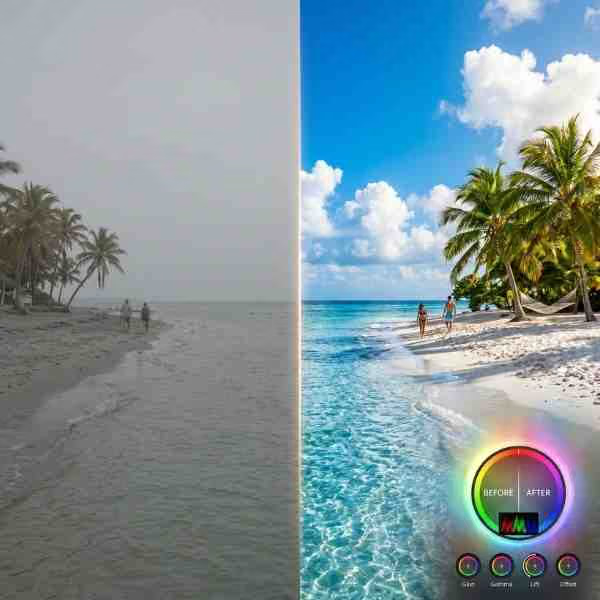
The most vivid and saturated sub-style in the entire pack, built specifically for golden-hour beach and travel footage where you want maximum vibrancy — deep oranges, warm skin tones, and a strong overall glow.
For technique reference specifically on this style, Create this Golden Hour Look in DaVinci Resolve is a beginner-friendly walkthrough of a similar warm, glowing grade.
All 50 LUTs are .cube files (33×33×33), compatible with every major NLE.
Premiere Pro: Lumetri Color panel > Creative tab > Look dropdown > Browse > select your file.
DaVinci Resolve: Copy .cube files into your Resolve LUT folder, apply via the Color page node tree under LUTs.
Final Cut Pro: Copy files to your Motion Templates LUT folder, or apply via a compatible LUT plugin.
After Effects: Apply the Lumetri Color effect, then Basic Correction > Input LUT to browse to your file.
For a genuinely comprehensive grounding in color grading generally — useful regardless of which LUT pack you're applying — The Ultimate Guide to Color Grading in Premiere Pro is a full free course covering the fundamentals this entire pack builds on.
One practical tip specific to warm-only grading: because there's no cool shadow tone to balance the warmth, it's easier for skin tones to drift too far into orange than with a complementary grade like teal-orange. If you're applying Sunset Beach or Golden Hour Glow to footage with close-up faces, start with a lower-numbered variant and check skin tones carefully before committing to a stronger option.
(Affiliate disclosure: some links on this page may be affiliate links. If you make a purchase through one of these links, FreeVisuals may earn a commission at no extra cost to you. We only recommend products and platforms we genuinely believe in. Read our full disclosure policy.)
Will this look work on footage that wasn't shot during golden hour?Yes, that's largely the point — these LUTs are designed to evoke golden hour warmth even on footage shot in flat or neutral lighting. That said, footage with genuinely warm ambient light to begin with will always respond more naturally than footage shot in cool, overcast, or fluorescent lighting, where you may need a stronger variant to compensate.
Why do my whites look slightly yellow after applying these LUTs?This is expected and part of the warm-only design — since there's no cool counterbalance, true white will shift slightly warm. If you need to preserve pure white in part of your frame (product shots, text overlays), consider masking that area out of the grade or using a lighter variant.
Which sub-style works best for food content specifically?Cozy Cafe and Golden Hour Glow are our most-used sub-styles for food and cafe content — both flatter warm tones in food (bread, coffee, roasted dishes) without oversaturating in ways that can make food look artificial.
Can I mix this pack with the Teal & Orange collection in the same project?Yes, and it's a common approach — use warm-only grading (this pack) for lifestyle and interview segments, then switch to Teal & Orange for more dramatic or action-oriented sequences within the same video. The shift in color language reads as an intentional tonal shift rather than an inconsistency.
Does the strength of the warmth need to match the actual time of day I filmed?Not strictly, but it helps for believability. Footage shot at genuine golden hour can usually take a stronger variant (07–10) and still look natural, since the underlying light already supports the warmth. Footage shot at midday or under flat lighting tends to look more convincing with a lighter variant (03–06) — pushing too hard on flat-lit footage can start to look like a filter rather than a lighting condition, which slightly undercuts the cinematic effect you're going for.
If you're planning footage specifically to pair with this pack rather than applying it after the fact, a few habits make a noticeable difference. Shooting during the actual golden hour — roughly the hour after sunrise or before sunset — gives you real directional, warm-toned light to grade on top of, rather than manufacturing the entire effect digitally. Backlighting subjects during this window (sun behind them, camera facing toward it) creates the soft rim-light and haze that Golden Hour Glow and Sunset Beach are built to enhance rather than invent from nothing. If golden hour shooting isn't practical for your schedule, a simple warm-toned LED panel or reflector can approximate some of the same quality indoors, giving the Cozy Cafe and Vintage Sepia Warmth sub-styles more to work with.
Golden Hour & Cozy Warmth is available now as part of FreeVisuals Pro:
All 50 LUTs are yours to use across unlimited personal and commercial video projects. Got a specific warm or seasonal look you'd like us to cover next? Let us know via our Contact page.

Download free video templates, LUTs, and presets for Premiere Pro, After Effects, DaVinci Resolve, CapCut, and Final Cut Pro.