.avif)
Freevisuals

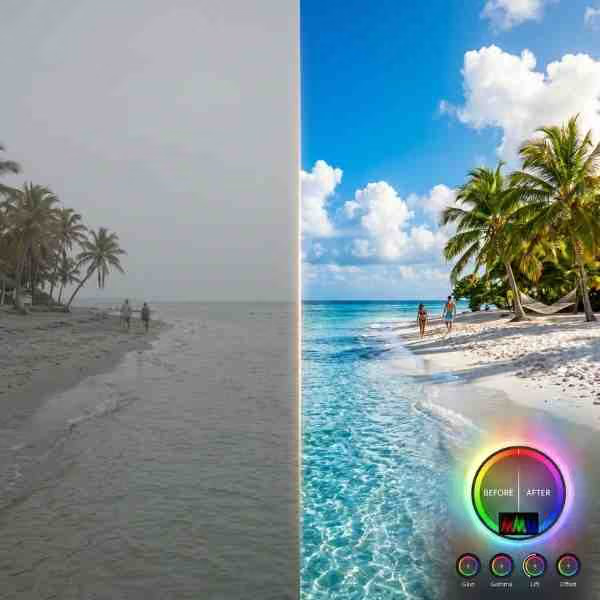
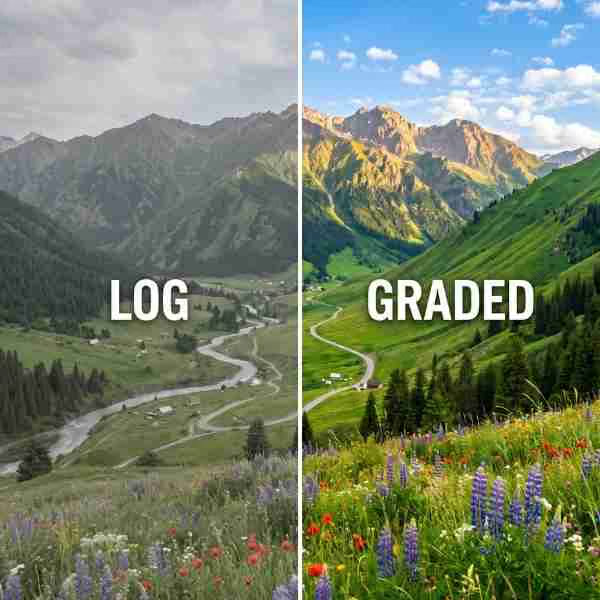
A vibrant and dynamic range of colors highlighting the high dynamic range effect, free Final Cut Pro template for punchy footage.
Download FREEGo Pro To DownloadDownload NOW!A vibrant and dynamic range of colors highlighting the high dynamic range effect. Built for Final Cut Pro, Final Cut Pro HDR Look gives editors a ready-to-apply color template rather than requiring a custom build from scratch.
If you're building a broader project around this color template, browse our Final Cut Pro templates for additional options to pair with it, and for music to underscore your project, Artlist and Epidemic Sound both carry a wide range of tracks well suited to most editing contexts.
Whether you're producing content on a regular publishing schedule or working on a single standalone project, Final Cut Pro HDR Look is built to slot into your existing Final Cut Pro workflow without requiring you to rebuild familiar steps from scratch, giving you one less decision to make from zero on your next edit.
Every element listed above is included directly in the download, ready to apply within Final Cut Pro without needing to source additional files or plugins separately. This matters for keeping your project setup simple, since a color template that depends on several separate, hard-to-find components tends to introduce far more friction into a workflow than one delivered as a single, self-contained package like Final Cut Pro HDR Look.
Delivered as a lightweight, self-contained file, Final Cut Pro HDR Look adds minimal overhead to your project regardless of your specific computer's processing power, meaning even editors working on more modest hardware can apply and preview it without significant slowdown, an important practical consideration alongside the purely creative benefits this color template provides.
A well-built color template solves a genuinely recurring problem for editors, the same visual or technical decision showing up project after project, without needing to rebuild the underlying work from scratch every single time. Rather than manually recreating this specific look or effect by hand for every new video, having it available as a ready-to-apply color template turns what might otherwise be a repeated, time-consuming task into something closer to a single click, freeing up meaningful time for the parts of editing that genuinely benefit from fresh creative attention.
This matters more than it might initially seem for anyone producing content on a regular schedule. Small, repeated production tasks add up considerably over a busy month of editing, and a reliable color template like this one removes one of those recurring tasks from the list entirely, letting Final Cut Pro HDR Look become a dependable part of a broader, more efficient production pipeline rather than something reinvented from scratch on every single project.
The core use case this template is built for, giving footage a considered color treatment with minimal setup. Applying Final Cut Pro HDR Look consistently across this kind of content helps build a recognizable, considered visual identity rather than a one-off effect used in isolation.
Creators wanting a consistent visual mood across regular uploads benefit from applying this grade consistently. Since this color template is genuinely reusable, it's worth keeping in mind as a default option any time a similar project comes up in your regular Final Cut Pro workflow.
Event videographers can use this grade as a fast starting point for a specific, considered color mood. Editors working in this specific content category benefit from the time this color template saves compared to building a similar result manually for every new project.
Independent filmmakers can use this grade as a foundation before fine-tuning further with additional grading. This use case in particular rewards the consistency a ready-made color template like this one makes genuinely practical across a larger body of work.
Vertical, social-first content benefits from a quick, consistent color treatment applied directly within Final Cut Pro. Considering how this color template fits alongside your other production choices for this specific content type helps ensure the final result feels cohesive rather than disconnected.
Most finished projects in Final Cut Pro involve stitching together a whole series of individual decisions, footage selection, pacing, color, sound, text, and a color template like this one represents just one piece of that larger puzzle. Understanding where it fits within that broader sequence of decisions, applied early enough to inform how surrounding elements are chosen, but not so early that it locks in choices before the rest of a project has taken shape, tends to produce a more considered, cohesive final result than treating it as an afterthought bolted on at the very end of an edit.
For editors working through a typical Final Cut Pro project, it's often worth applying Final Cut Pro HDR Look at a reasonably early stage, once your rough cut is in place but before final color and sound design begins, so the rest of your creative decisions can be made with this specific color template already factored into the overall look and feel you're building toward.
Hit the download button and grab the template file.
Unzip the downloaded folder into a dedicated project directory, keeping it organized alongside your other project assets.
Follow the included installation instructions to place the file into Final Cut Pro's native LUT or Effects folder.
Final Cut Pro typically needs to be restarted, or the relevant browser refreshed, before newly installed effects appear.
Select the clip you want to apply the color grade to on your timeline.
Locate the effect within your Effects browser and drag it directly onto your selected clip.
Open the Inspector panel to blend the effect's strength against your original footage.
Scrub through your timeline to confirm the grade reads well across your specific footage and lighting conditions.
Apply the same effect across every clip in your sequence for a cohesive, consistent look.
Once you're happy with the result, render and export using your project's standard delivery settings.
Following these steps in order, rather than skipping ahead to the customization stage before confirming the color template is correctly installed and appearing where expected within Final Cut Pro, avoids the most common source of frustration when working with any new template or preset file for the first time. Once you've been through this process once with Final Cut Pro HDR Look, applying it to future projects becomes considerably faster, since the initial installation and familiarization step only needs to happen a single time.
One of the most valuable qualities a color template can offer is consistency, the ability to produce a broadly similar, reliable result across different footage, different lighting conditions, and different specific projects, rather than requiring significant readjustment every single time it's applied. Final Cut Pro HDR Look is built with this kind of consistency in mind, meaning creators who apply it across a whole body of work, a full channel, a full wedding season, a full campaign, can reasonably expect a cohesive result without needing to recalibrate from scratch for every individual piece.
This consistency has real practical value beyond simple convenience. A body of work that shares a consistent visual or technical treatment reads as more considered and professional to an audience than a collection of individually inconsistent pieces, even when the underlying content quality is otherwise comparable. Applying this color template deliberately and consistently, rather than only occasionally, is part of what turns a useful individual asset into a genuine contributor to an overall recognizable style.
Most of these mistakes share a common thread, moving too quickly through the application process without taking a moment to preview and confirm the result actually suits the specific footage or project at hand. Building a habit of a quick, deliberate preview before finalizing any use of Final Cut Pro HDR Look, rather than assuming the default settings will automatically work for every situation, is a small habit that meaningfully improves the consistency of your finished results over time.
Light Leaks Transitions In DaVinci Resolve 18 Tutorial, useful background directly applicable to customizing and applying this asset.
The technical difference between a color template applied thoughtfully and one applied carelessly often comes down to a handful of small, easily overlooked decisions, whether the effect's intensity genuinely suits the specific footage it's applied to, whether its timing is calibrated to the actual pacing of the surrounding edit, and whether it's used consistently enough to feel intentional rather than applied inconsistently from clip to clip. Final Cut Pro HDR Look provides the underlying technical foundation, but these final calibration decisions remain genuinely important for the finished result to feel considered rather than default.
Taking the small amount of extra time these calibration decisions require, rather than accepting Final Cut Pro HDR Look's default settings uncritically across every single use, is precisely the kind of detail that separates work that reads as genuinely professional from work that merely uses professional-grade tools without fully considering how they're actually applied to the specific project at hand.
Visual and technical trends within video editing shift meaningfully over time, and it's worth considering whether Final Cut Pro HDR Look's specific approach represents a genuinely durable technique or one tied more closely to a passing stylistic moment. Effects and techniques grounded in solid underlying production principles, clear communication, considered pacing, technically sound execution, tend to remain useful considerably longer than those built purely around a specific trending aesthetic that risks feeling dated within a relatively short period.
This particular color template leans toward the more durable end of that spectrum, built around genuinely useful Final Cut Pro technique rather than a narrow, trend-specific look alone, which is part of why it's likely to remain a reasonable addition to a working toolkit well beyond any single specific editing trend cycle. That said, periodically reassessing whether any specific asset in your toolkit still serves your current work is a healthy habit regardless of how durable any individual asset might be.
Weighing the genuine strengths and limitations of any color template before committing to it across a full project helps set realistic expectations rather than discovering a mismatch partway through an edit. Final Cut Pro HDR Look is no exception, it does its specific job well, but understanding exactly where it excels and where its limitations lie helps you apply it with appropriate confidence rather than either over-relying on it in situations it wasn't built for, or underusing it out of unnecessary caution in situations where it would genuinely help.
Final Cut Pro. Check the specific download page for the exact version requirement.
Yes, directly through the Inspector panel once applied to your clip.
Yes, free for both personal and commercial projects.
It's built for broad compatibility, though always preview against your specific footage since results can vary depending on original lighting and color.
Check the specific download page, most color templates in this category are built to work natively within Final Cut Pro.
Yes, it works well as a foundation you can layer further manual correction on top of.
Final Cut Pro HDR Look is a simple, genuinely useful addition to a Final Cut Pro workflow, the kind of color template that quietly saves time on a recurring basis rather than serving as a flashy, one-time feature. For creators building a regular content production schedule, having a reliable set of these kinds of assets on hand, rather than rebuilding similar effects from scratch on every new project, is a genuinely meaningful part of working efficiently without sacrificing the polish a finished project deserves. Download it, spend a few minutes getting familiar with its specific controls, and it should earn a lasting place in your regular toolkit alongside the rest of your go-to Final Cut Pro assets.
Whichever specific way you end up using Final Cut Pro HDR Look, the underlying principle worth carrying forward is treating a well-built color template as a genuine part of your working toolkit rather than a novelty tried once and forgotten, since that's ultimately where assets like this one deliver their real, compounding value over an entire body of work rather than any single isolated project.
No single color template is the right fit for absolutely every project, and it's worth having a couple of genuinely different options on hand for situations where Final Cut Pro HDR Look isn't quite the right match. The following are worth bookmarking alongside this download, whether you need a different stylistic direction for a specific project, complementary music and sound to round out your Final Cut Pro edit, or additional visual assets to build out a fuller production.
Affiliate Disclosure: This post may contain affiliate links. If you make a purchase through one of these links, FreeVisuals may earn a commission at no extra cost to you. We only recommend products and platforms we genuinely believe in. Read our full disclosure policy.
Download free video templates, LUTs, and presets for Premiere Pro, After Effects, DaVinci Resolve, CapCut, and Final Cut Pro.