.avif)
Freevisuals
Artlist has quietly rebuilt itself from a royalty free music library into one of the most ambitious AI production platforms currently available, and Flow is genuinely its most consequential recent addition. Rather than another single purpose generation tool, Flow is a visual, node based canvas letting you connect prompts, AI models, and your own assets into a reusable creative pipeline, build it once, then run it as many times as you need. This guide covers exactly what Flow is, why it genuinely matters for how creators are starting to think about AI production, and how to actually get value from it.
Artlist Flow is a node based visual canvas letting creators chain AI generation steps, image, video, voiceover, and music, into one reusable pipeline rather than juggling separate tools across browser tabs. This guide covers how Flow actually works, why it represents a genuine shift in how AI production tools are being built industry wide in 2026, how it fits within Artlist's broader AI Toolkit and Studio offerings, real current pricing, and practical guidance for creators deciding whether to build their workflow around it.
.jpg)
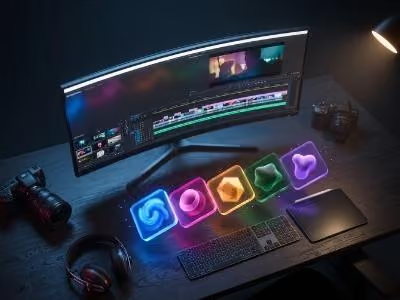
Flow is genuinely simple to describe and genuinely powerful once you actually use it. Instead of generating a single image or clip in isolation, then manually downloading it and uploading it into a separate tool for the next step, voiceover, music, further editing, Flow lets you build that entire sequence visually on one canvas. You connect prompts, specific AI models, and your own uploaded assets as nodes, wire them together in the order your actual creative process needs, and run the whole pipeline with one click. Once built, that exact pipeline becomes genuinely reusable, swap in new inputs, different product photos, a new script, a different reference image, and run the same structure again without rebuilding anything from scratch.
This addresses a genuinely real, well documented pain point in modern AI content production specifically, what the industry has started calling tab hopping, the considerable friction of generating an image in one tool, downloading it, uploading it to a separate video generator, downloading that output, uploading it again to a voiceover tool, and so on. Each handoff between tools costs time and introduces genuine risk of losing context or version control. Flow keeps the entire pipeline in one place, one canvas, one history, one reusable structure.
It's genuinely worth understanding that Artlist Flow isn't an isolated idea, node based visual AI canvases have emerged as a genuine, defined category across the AI creative tool space specifically throughout 2026. ElevenLabs launched its own Flows feature in March 2026, built around similar principles but leaning more heavily into voice and audio led pipelines. Higgsfield's Canvas and Picsart's Flow both launched around the same period, each targeting a slightly different creative focus but sharing the same underlying architecture, nodes, nothing lost between steps, and reusable structure built once and run repeatedly.
This convergence genuinely reflects a real, shared realization across the industry, individual AI generation tools had gotten genuinely capable, but the actual workflow connecting them together remained the real bottleneck for serious, repeatable production work. Building Flow style tools was each platform's answer to that same underlying problem, independently, at roughly the same time.
Understanding Flow's place within Artlist's considerably larger platform matters for evaluating its actual value. The AI Toolkit itself spans more than 64 separate image and video generation models, alongside a genuinely capable AI voiceover suite, all under one unified interface. Within that Toolkit, Artlist offers several distinct ways to actually create, the AI Agent, a chat based mode where you simply describe what you need in plain language and Artlist selects the right models and settings automatically, Studio, a layer based, two stage workflow separating scene framing, character, background, lighting, camera, from directing, motion, clip length, voice, and Flow, the visual canvas covered throughout this guide, specifically built for chaining multiple steps into one reusable pipeline.
These aren't competing options so much as different entry points suited to different working styles, the AI Agent for fast, conversational generation, Studio for granular, director level control over a single complex scene, Flow specifically for building a repeatable production pipeline you'll genuinely run more than once. Explore Artlist's full AI Toolkit, including Flow, directly through this link.
For a genuinely thorough, hands-on walkthrough covering how image, video, voice, and sound generation actually work together within Artlist's connected workflow, watch Artlist AI Toolkit Review, Image, Video, Voice, And Sound In One Flow. This is worth watching specifically because it demonstrates the actual practical experience of moving between generation types without leaving the platform, exactly the friction Flow itself is built to eliminate entirely.
The single most important thing to understand about Flow specifically is that its real value isn't any individual generation, it's the structure itself becoming reusable. Building a pipeline once, a product photo goes in, gets turned into a lifestyle scene, gets a voiceover added, gets scored with music, then running that exact same structure again with a different product photo next week, is a genuinely different way of working than treating every single piece of content as its own isolated project from scratch.
This matters enormously specifically for creators and small teams producing content at genuine volume, agencies handling multiple clients, e-commerce brands with large product catalogs, marketing teams running recurring campaign formats. Rather than relearning or rebuilding your process for every new asset, Flow lets your actual creative decisions, which models to use, what order steps happen in, how elements connect, become a genuine, durable asset in themselves rather than something you reconstruct from memory every time.
Artlist's own leadership has been genuinely direct about what this technology is actually meant to do, and it's worth understanding this framing clearly. Rather than positioning AI as a full replacement for human talent, Artlist's Chief Product and Technology Officer specifically described a hybrid workflow, spending your actual budget on human talent and genuine creative direction, while using AI specifically to replace expensive logistics, additional locations, extra shoot days, complex background work. In one specific example shared publicly, this approach let a production team take a $500,000 budget and put considerably more, reportedly comparable to a $50 million production's visual scope, on screen by replacing a single expensive background shot with an AI generated equivalent rather than actually traveling to film it.
This framing matters genuinely for how you should think about Flow specifically, it's not positioned as a tool for generating an entire finished piece from nothing, it's a tool for extending what a real production budget can actually accomplish, letting genuine creative and human resources go further by removing specific, expensive logistical steps rather than replacing the creative process itself.
Artlist's AI Suite plans specifically offer three separate credit tiers, 40,000, 80,000, or 120,000 credits monthly, priced from $29.99 to $69.99 monthly on annual billing, or $39.99 to $79.99 monthly if you'd rather not commit annually. Heavier AI users specifically, more videos, more images, more voiceover generations monthly, genuinely benefit from a higher credit tier, while lighter, more occasional users can reasonably start at the lower end. Flow itself doesn't carry a separate cost beyond your existing AI Toolkit credits, building and running a pipeline through Flow consumes credits at the same underlying rate as running each individual step separately would, the value specifically comes from time saved and genuine reusability rather than a discounted credit rate for using the canvas itself.
It's genuinely worth understanding what specifically changes when you move from a manual, tab hopping workflow to building the same sequence in Flow. Beyond the obvious time saved on repeated manual uploads and downloads, Flow's node based structure means you can rework any single step in your pipeline without regenerating everything downstream of it. If your voiceover step needs a script change, you can update just that node and rerun from there, rather than needing to regenerate your visuals from scratch alongside it. This genuinely matters for iterative creative work specifically, real projects rarely get every step right on the first attempt, and a manual workflow makes revisiting an early step in a long sequence genuinely painful compared to Flow's ability to isolate and rerun just the part that needs adjustment.
Version history and the ability to resume, remix, or branch off a previous run specifically also distinguishes this from ad hoc manual work, where tracking which specific version of an asset came from which specific combination of settings becomes genuinely difficult to manage once you're several iterations deep into a project.
E-commerce and product marketing specifically represents one of the strongest practical fits for Flow's reusable structure, building a single pipeline that takes a raw product photo, generates a styled lifestyle scene around it, adds a voiceover describing the product, and scores it with music, then running that exact same pipeline across an entire product catalog rather than manually repeating the process for each individual item. Marketing agencies managing recurring content formats for multiple clients specifically benefit similarly, a proven campaign structure becomes a genuine template swappable across different client brands and messaging without rebuilding the underlying creative logic each time.
Educational content creators and course producers specifically use this kind of pipeline for consistent, repeatable lesson intros or explainer segments, building the visual and audio structure once and reusing it across dozens of individual lessons with only the specific topic content changing between runs. Social media teams managing high volume, recurring content formats, a weekly product spotlight, a regular explainer series, similarly benefit from locking in a proven pipeline structure rather than treating each week's content as an entirely separate creative exercise.
Since Flow's output ultimately needs to reach a finished, published piece of content, understanding how it connects to the rest of your production stack matters practically. Artlist maintains genuinely smooth integration with professional editing software specifically, Premiere Pro and DaVinci Resolve both connect directly, letting assets generated through Flow move into your actual editing timeline without manual file transfer friction. For creators working primarily in CapCut specifically, CapCut pairs well with Flow generated assets for fast, mobile friendly final assembly and platform specific export.
For editors wanting additional finished templates to frame Flow generated content, Motion Array and Envato Elements both offer broad template catalogs compatible with most major editing platforms, worth pairing with Flow's raw generated output for a genuinely polished final result.
Since both Flow and Studio live within the same Artlist AI Toolkit, understanding when each genuinely makes more sense matters for choosing the right tool for a specific task. Studio's real strength is granular, director level control over a single, complex scene specifically, its two stage framing and directing process gives you considerably more precision over one particular shot's exact look and motion than Flow's broader, multi-step pipeline focus does. Flow's real strength is the opposite specifically, connecting several distinct generation steps together into one reusable sequence, less about perfecting one single frame and more about building a repeatable process spanning multiple different outputs, image, video, voice, and music, working together.
For a single, hero piece of content where precise creative control over one complex scene matters most, Studio is genuinely the better tool. For content you'll genuinely need to produce repeatedly with the same underlying structure, Flow's reusability advantage becomes the more valuable capability.
Independent testing of Artlist's broader AI Toolkit specifically has consistently praised its genuinely intuitive interface, one reviewer specifically noted finding Artlist considerably easier to navigate than competing platforms like Freepik, describing Artlist's layout as making sense immediately rather than requiring the user to fight the tool to find what they need. The platform's deep roots in music licensing specifically were also highlighted as a genuine ongoing advantage, Artlist's audio catalog remains considerably stronger than platforms that added music generation as more of an afterthought to their core AI offering.
Where independent coverage has offered more balanced, cautious framing specifically involves the underlying AI models themselves, Artlist's Toolkit functions genuinely as a dispatch center connecting you to models from Google, Kling, and other developers rather than training its own generation models from scratch, worth knowing since the actual generation quality for a specific task depends partly on whichever underlying model you select within Flow rather than being uniform across every possible pipeline you might build.
For creators genuinely new to building a Flow pipeline specifically, starting with a deliberately simple, two or three step sequence before attempting a more elaborate multi-stage pipeline is genuinely worth doing. A basic starting structure, an image generation step feeding into a voiceover step, for instance, lets you understand the actual node connection and rerun behavior on a manageable scale before building toward a considerably more complex sequence involving multiple generation types and several reference inputs. Browsing Artlist's library of publicly shared Flow templates specifically, built by other creators and available to remix, is also genuinely worth doing before building entirely from scratch, giving you a real, working structure to study and adapt rather than starting from a completely blank canvas.
One of Flow's genuinely underappreciated strengths involves how it handles model choice within a single pipeline specifically. Rather than being locked into one company's proprietary generation engine for an entire sequence, Flow lets you select the specific best fit model for each individual node, one image model genuinely strong at photorealistic product shots, a different video model better suited to character driven motion, ByteDance's Seedance specifically offering considerably longer single pass generation for narrative sequences. This node by node model flexibility means your pipeline's overall quality isn't limited by any single model's particular weaknesses, you can genuinely mix and match based on each specific step's actual requirements.
This matters practically because AI model capability continues shifting rapidly, a model that's genuinely the strongest option for a specific task today may be surpassed within months by a newer release. Since Flow's architecture connects to Artlist's full model catalog rather than committing your pipeline permanently to one specific engine, swapping a specific node's underlying model as better options become available genuinely keeps a built pipeline current without needing to rebuild the entire structure from scratch each time the underlying AI landscape shifts.
For agencies and larger creative teams specifically, Flow's reusable structure extends genuinely usefully into collaborative, shared workflows rather than remaining purely a solo creator tool. A senior creative or art director can build and refine a proven pipeline structure once, then hand that same structure to junior team members or freelancers to run with new inputs, product photos, scripts, brand assets, without those team members needing the same deep prompting expertise the original pipeline builder brought to the initial creation. This genuinely democratizes access to a studio's established creative standards across a team with varying skill levels, rather than requiring every individual team member to independently develop the same prompting and model selection expertise from scratch.
For agencies managing multiple client accounts simultaneously specifically, maintaining separate, clearly labeled Flow pipelines per client, each reflecting that specific client's established visual identity and content format, genuinely reduces the risk of cross-client visual inconsistency that can occur when team members build ad hoc generations without a genuinely standardized, reusable structure guiding the work.
It's worth being honest that Flow's node based structure, however genuinely powerful once mastered, does represent a real, initial learning curve for creators accustomed purely to simple, single prompt generation tools. Understanding how nodes connect, how outputs from one step feed as inputs into the next, and how to structure a pipeline logically rather than randomly takes genuine time to internalize, particularly for creators without prior experience with similar node based tools in other software categories, visual programming environments, certain 3D and compositing software, for instance.
This learning curve genuinely pays off specifically for creators with real, ongoing production volume where the reusability advantage compounds over many future uses, but for a creator with only occasional, one-off generation needs specifically, the simpler, more direct AI Agent chat interface within the same Toolkit may genuinely serve that more modest use case better without requiring the same upfront investment in learning Flow's specific structure and logic.
Since node based AI canvas tools represent such a genuinely new category across the industry, several aspects of how Flow and its direct competitors will continue developing remain honestly still in motion. API access for triggering Flow pipelines programmatically, letting external business systems or applications automatically run a pipeline in response to a specific event, a new product added to an inventory system, for instance, is a genuinely significant capability several platforms in this space, including close competitors, have flagged as actively coming rather than already fully available. This kind of programmatic access would genuinely extend Flow beyond manual, creator initiated use into genuinely automated production infrastructure, worth watching for specifically if your actual use case would benefit from that level of automation beyond manual pipeline runs.
Cross-platform pipeline portability, the ability to genuinely move a built pipeline structure between different platforms rather than being locked into whichever specific tool you originally built it in, also remains a genuinely open question across this entire tool category currently, worth factoring into your decision if platform lock-in specifically concerns you before investing significant time building out an elaborate pipeline library within any single platform's specific tools.
A frequent mistake involves building an overly complex pipeline before confirming each individual step actually works well in isolation, troubleshooting a failed multi-step generation is considerably harder than testing each node's output individually first before connecting them into a longer sequence. Starting simple and expanding gradually, rather than building your most ambitious pipeline on the first attempt, avoids this genuinely common frustration. Another common issue involves not accounting for how longer, more elaborate pipelines consume credits considerably faster than a single isolated generation, testing a new pipeline structure at a smaller scale before running it across a large batch of content avoids an unexpectedly large credit consumption from a pipeline design flaw you hadn't yet caught.
For creators genuinely weighing whether learning Flow's pipeline structure is worth the time investment against simply outsourcing repetitive production tasks to a freelancer or agency, the honest answer depends considerably on your actual production volume and timeline flexibility. For a genuinely one-off project, hiring out specific tasks remains entirely reasonable, the learning curve Flow requires isn't worth absorbing for a single use case. For genuinely recurring production needs specifically, a weekly content format, an ongoing product catalog, a repeated campaign structure, the time invested in building a reusable Flow pipeline once tends to pay for itself considerably faster than repeatedly paying for the same manual work each time that recurring need comes up again.
This calculation genuinely shifts further in Flow's favor the longer your production timeline extends, a pipeline built once and reused across months or years of recurring content compounds its time savings considerably more than a comparison based purely on a single project's immediate cost alone would suggest.
.jpg)
No, Flow is a feature within the broader AI Toolkit, using the same credit system and account as Artlist's other AI generation tools.
No, Flow consumes credits at the same rate as running each individual generation step separately, its value comes from time saved and genuine reusability rather than a discounted rate.
Yes, this is genuinely one of Flow's core advantages, you can adjust a specific node and rerun just that part, rather than regenerating your entire pipeline from the beginning.
Studio offers granular, director level control over a single complex scene, Flow is built for chaining multiple distinct generation steps into one reusable, repeatable pipeline.
Yes, ElevenLabs, Higgsfield, and Picsart have all launched comparable node based visual canvas tools in 2026, reflecting a genuine, broader industry shift toward this workflow style.
Artlist Flow genuinely represents a meaningful shift in how AI production tools are being built, moving away from isolated, single purpose generation tools toward reusable, visual pipelines that treat your actual creative process as a durable asset rather than something rebuilt from scratch for every new piece of content. For creators and teams producing content at genuine volume specifically, e-commerce catalogs, recurring campaign formats, ongoing educational content, Flow's real value lies less in any single generation and more in the structure itself becoming something you build once and genuinely reuse indefinitely. Understanding where it fits alongside Artlist's other tools, Studio for granular single scene control, the AI Agent for fast conversational generation, helps you choose the right entry point for whatever specific creative task is actually in front of you, and starting deliberately small with your first pipeline, rather than attempting your most ambitious idea on day one, remains the most reliable way to genuinely internalize how this considerably different way of working actually functions before scaling up to more elaborate, multi-step production sequences.
Affiliate Disclosure: This post may contain affiliate links. If you make a purchase through one of these links, FreeVisuals may earn a commission at no extra cost to you. We only recommend products and platforms we genuinely believe in. Read our full disclosure policy.

.avif)
.avif)
.avif)
.avif)