.avif)
Freevisuals
Magnific built its reputation as the single most convincing AI upscaler available, an image enhancer that doesn't just enlarge a picture but genuinely invents plausible new detail as it goes. In April 2026, the company behind it made a genuinely major move, folding its entire parent platform, Freepik, under the Magnific name entirely. What was once a narrow, specialist upscaling tool is now a full creative suite covering image generation, video, audio, and design. Here's an honest breakdown of what changed, what it actually costs now, and whether it's genuinely worth your money in 2026.
Magnific, formerly Freepik, rebranded its entire creative platform under the Magnific name on April 28, 2026, unifying AI image generation, video, upscaling, audio, and Freepik's stock library into one credit based subscription. This review covers what genuinely changed with the rebrand, real current pricing across four tiers, the two-pass upscaling technique that built Magnific's original reputation, honest user complaints about credit transparency, and how it compares to Topaz and OpenArt AI specifically.
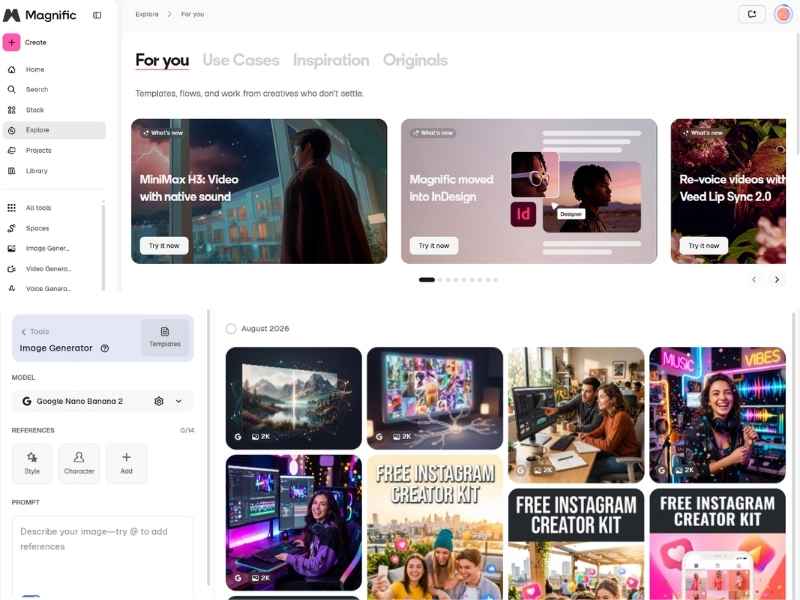
This context matters considerably for understanding what you're actually evaluating. Magnific started as an independent AI upscaler built by two founders, Javi Lopez and Emilio Nicolás, and earned a strong reputation specifically for its detail hallucinating approach to enlarging images. Freepik, the long established stock asset and design platform, acquired Magnific in May 2024. For nearly two years the two brands operated separately, Freepik as the stock library and broader AI suite, Magnific as its own standalone upscaling product with its own pricing and its own website.
On April 28, 2026, that separation ended entirely. Freepik consolidated its full AI stack, image generation, video, upscaling, audio, and design tools, under the Magnific name at magnific.com, reportedly at a $230 million annual revenue run rate with more than 1 million paying subscribers. If you had an existing Freepik account, nothing was deleted, your projects, subscription, and API access continued working exactly as before, this was a unification of branding rather than a replacement of the underlying product or team. Third party documentation and tutorials referencing the old Freepik name are still catching up, worth knowing if you come across older guides that don't reflect the current, unified Magnific branding.
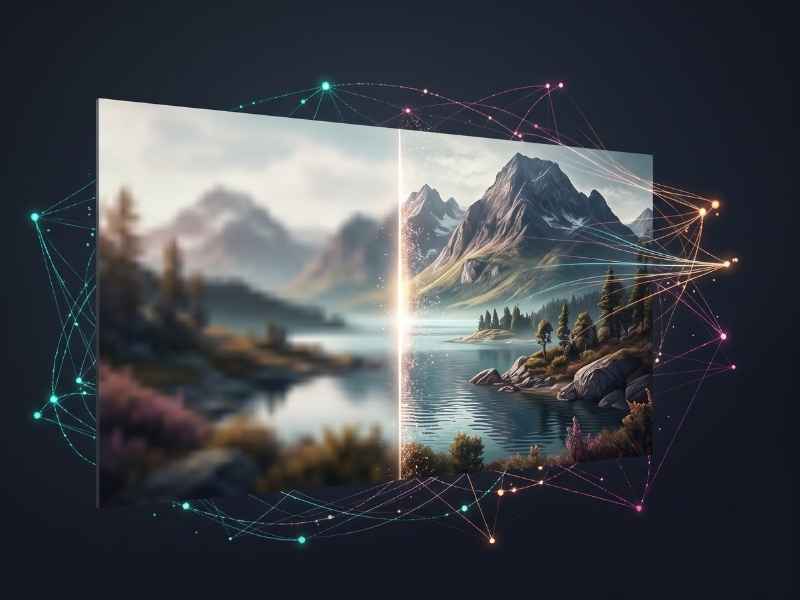
Before the rebrand, Magnific was known for exactly one thing, and it's still genuinely the standout capability inside the unified platform today. Rather than interpolating existing pixels the way traditional upscalers do, Magnific's engine invents plausible new detail as it enlarges an image, skin texture, fabric weave, foliage, reflections, that wasn't actually present in the original low resolution source. The recommended workflow specifically runs a two pass process, Illusio first to establish overall structure and composition, then Sharpy to refine fine detail, producing results that experienced users describe as looking like the image was genuinely captured at a far higher resolution rather than simply stretched larger.
This capability supports 4x, 8x, and up to 16x upscaling, with creativity sliders letting you control how much the AI invents versus how faithfully it preserves the original image. This is genuinely the deciding factor for many users specifically, if you're finishing AI generated art from Midjourney or Stable Diffusion and need it at print resolution, Magnific's detail generating approach produces results other upscalers simply can't match. For photographers wanting strictly faithful restoration of a real photograph rather than invented detail, this same strength becomes a genuine limitation, worth understanding before choosing Magnific specifically for that use case.
You can try Magnific's upscaling and full creative suite directly through this link.
Beyond upscaling specifically, the post rebrand platform genuinely covers considerable ground. Image generation draws from more than 40 aggregated AI models, Flux, Mystic, Google Imagen, Ideogram, and Nano Banana 2 among them, letting you pick a specific model suited to a specific task rather than being locked into one proprietary engine. Video generation similarly aggregates leading models, Kling, Veo, and Runway specifically, into one interface. Spaces, a node based visual canvas, lets you build genuinely repeatable, multi step creative workflows, chaining generation, editing, and upscaling steps together visually rather than running each step as a separate, disconnected action.
The platform also retains Freepik's original strength, more than 250 million licensed stock assets, photos, vectors, templates, giving you a genuinely broad supplementary library alongside the AI generation tools themselves. For agencies and enterprises specifically, collaborative team features and full legal indemnification for commercially used AI generated content round out the offering.
For a genuinely thorough, current walkthrough of the unified platform's actual video generation capabilities specifically, watch Magnific AI Review, Best AI Video Generator Of 2026 (Freepik Spaces). This is worth watching specifically because it demonstrates the node based Spaces workflow directly, considerably clearer to understand seeing it built live than reading a written description of how the pieces connect.
A genuinely balanced review has to cover this section directly rather than glossing past it. The single most frequently repeated complaint centers on the word "unlimited" itself, several reviewers and existing subscribers report that models originally marketed as unlimited on the Premium+ tier were later rate limited or shifted onto credit based billing after purchase, with a documented policy change on April 21, 2026 moving specific models off the unlimited tier entirely. One user specifically described this as feeling like a bait and switch, having subscribed under one set of terms only to see the actual usable allowance change after they'd already committed to an annual plan.
Credit transparency is a second, genuinely common frustration, the actual credit cost of a specific generation isn't always clear until after you've already submitted it, and video credit consumption varies considerably between the different aggregated models, making it genuinely difficult to predict your actual monthly cost in advance. High factor upscales specifically, the 16x tier Magnific is known for, consume credits at what several small business users describe as an alarming rate, meaning even a Premium+ subscription's larger allowance can run dry considerably faster than expected for anyone doing heavy upscaling work regularly. Content moderation has also drawn criticism, several users report content that generates without issue directly through a specific model's own native interface, Runway, for instance, gets blocked when routed through Magnific's own interface layer instead, a genuine inconsistency worth knowing about if your work touches on edge case content.
None of this suggests Magnific is unsafe or illegitimate, it's a real, substantial company with genuine enterprise clients and legal indemnification for commercial use. The real risk here is financial predictability and platform dependency rather than trust, you don't control the pricing or uptime of the third party models Magnific aggregates, and credit costs can change with limited notice.
This comparison matters specifically for anyone weighing Magnific purely as an upscaler rather than the full creative suite. Topaz, covered in detail in our own Topaz Labs pricing guide, takes a more conservative, faithful approach to upscaling and enhancement specifically, prioritizing accuracy over invented detail. For photographers wanting genuinely clean, faithful restoration of a real photograph, several independent reviewers specifically note Topaz produces more accurate results for less money than Magnific's detail hallucinating approach. Magnific's real advantage specifically shows up finishing AI generated art, where inventing plausible new detail is exactly what a Midjourney or Stable Diffusion render needs to hold up at large print sizes, a task Topaz's more conservative approach handles less convincingly.
Both platforms take a similar aggregator approach, bundling many third party AI models under one subscription rather than building a single proprietary engine, worth comparing directly if you're choosing between the two rather than Magnific specifically. Our full OpenArt AI review covers its own credit structure and free trial in detail. The genuine difference specifically comes down to scope, Magnific leans considerably more heavily into the finishing and enhancement side, upscaling, detail generation, professional retouching, alongside a genuinely broader video model selection through its Spaces node workflow, while OpenArt's core strength sits more specifically in character consistency and beginner accessible prompt assistance. For teams needing genuinely heavy duty upscaling as a core part of their workflow specifically, Magnific's specialized strength there gives it a real edge over OpenArt's more general purpose approach.
Magnific is a genuinely strong fit for AI artists and designers specifically needing to push generated images to print resolution with convincing added detail, and for agencies and creative teams wanting image, video, and audio generation consolidated under one subscription rather than juggling five separate tools. It's a considerably weaker fit for casual users only needing occasional upscaling, the platform is genuinely paid first with no meaningful working free tier, and for photographers specifically wanting strictly faithful, non-inventive restoration of real photographs, where Topaz's more conservative approach genuinely serves that specific need better.
Once you've generated or upscaled visuals through Magnific, getting them into a finished, polished piece of content is the natural next step. For short form video assembly specifically, pairing Magnific's output with CapCut gives you a fast path to captions, templates, and multi platform export. For narration paired with Magnific generated visuals specifically, ElevenLabs rounds out a complete faceless content pipeline with genuinely natural sounding voice rather than a robotic default. And for properly licensed music safe across every platform, Artlist avoids the Content ID issues that can come with unverified music sources once content built around AI generated visuals starts gaining real traction.
Beyond individual generation and upscaling actions, Spaces is genuinely one of the more distinctive features carried over into the unified platform, a visual, node based canvas letting you chain multiple AI steps together into one repeatable workflow. Rather than generating an image, downloading it, then separately uploading it to a different tool for upscaling, then again for a further edit, Spaces lets you connect these steps visually as nodes on a canvas, generation feeding directly into upscaling feeding directly into a final edit, all within one continuous, savable workflow.
This is genuinely valuable specifically for teams running the same creative process repeatedly, a consistent product photography pipeline, a recurring social content template, since building the workflow once and reusing it considerably speeds up production compared to manually repeating each individual step for every new piece of content. The learning curve here is real though, node based workflows genuinely require a different way of thinking than a simple linear generate and download process, and newer users should expect to spend genuine time learning how nodes connect before Spaces starts saving time rather than adding complexity.
Among Magnific's more specialized features, the Mockup Generator deserves specific mention for e-commerce brands and product photographers. Rather than a general purpose image generation tool applied loosely to product photography, this is a purpose built workflow specifically for turning a flat product image into a genuinely convincing lifestyle mockup, a product shown in a real world context, held, worn, placed in a styled scene, without an actual physical photoshoot. Independent review sources specifically single this out as one of the strongest, most narrowly verified workflows in the current AI creative tool space, a named, genuinely tested capability rather than just another item on a generic feature checklist.
For brands specifically needing to produce varied product imagery at volume, seasonal campaigns, multiple color variants, different lifestyle contexts, without commissioning a full physical photoshoot for every single variation, this specific tool genuinely justifies a meaningful part of Magnific's subscription cost on its own, separate from the broader upscaling and general generation capabilities covered elsewhere in this review.
Since Magnific doesn't train its own proprietary models for most of its generation capability, instead aggregating access to more than 40 third party models, Flux, Mystic, Nano Banana 2, Kling, Veo, Runway among them, it's worth understanding honestly what this structural choice means for your actual day to day experience. The genuine advantage is real choice, rather than being locked into one company's specific aesthetic and capability ceiling, you can pick whichever specific model best suits a given task, one model for photorealistic product shots, a different one for stylized illustration, all from the same interface and credit pool.
The genuine tradeoff is dependency, Magnific doesn't control the pricing, uptime, or feature roadmap of the third party models it aggregates, meaning a change on Google's or Kling's end, a price increase, a capability change, a temporary outage, ripples through to Magnific's own platform without Magnific having direct control over fixing it. This is worth understanding specifically as a structural characteristic of the aggregator approach generally, not a flaw unique to Magnific, OpenArt AI operates on the same fundamental model, but it's genuinely different from a platform like Midjourney that trains and fully controls its own single proprietary model end to end.
For agencies and businesses specifically using Magnific generated content in paid, commercial campaigns, the platform's stated legal indemnification for commercially used AI generated content is genuinely worth understanding in more depth before relying on it heavily. This kind of protection typically covers claims that generated content infringes on existing copyrighted material, a genuinely important consideration given ongoing, unresolved legal questions across the AI generation industry broadly about training data and output ownership.
That said, the specific scope and terms of this indemnification, what's covered, what isn't, and under which specific subscription tiers it actually applies, is worth reading directly and carefully on Magnific's own current terms of service rather than assuming blanket protection applies uniformly across every plan and every type of generated content, since these terms can genuinely differ meaningfully between the Business and Enterprise tiers versus the more consumer focused Premium and Premium+ plans.
Given the documented complaints about credit transparency and consumption speed covered earlier, a few practical habits genuinely help manage this in real use. Checking a specific action's credit cost before submitting, where the interface makes this visible, rather than assuming a rough estimate applies uniformly across different models and generation types, avoids the unpleasant surprise of watching a large chunk of your monthly allowance disappear on a single higher cost action. Batching similar tasks together within a single session, running several upscales back to back rather than spreading them out reactively throughout the month, gives you a clearer running sense of your actual consumption rate as you go.
For heavy upscaling work specifically, testing at a lower upscale factor first, 4x rather than jumping straight to 16x, before committing your full credit allocation to the highest tier output, lets you confirm a specific image is genuinely worth the higher credit cost before spending it, particularly useful given how significantly credit consumption scales with upscale factor specifically according to user reports.
For anyone who was already a Freepik subscriber before the April 2026 rebrand specifically, it's worth addressing the transition directly since search interest in exactly this question has spiked considerably since the change. Existing accounts, projects, downloads, and saved collections all carried over unchanged, and paid subscriptions continued at their existing terms through the transition itself. The API specifically remained functional at its original endpoints for a stated minimum of six months following the rebrand, giving developers and technical users genuine time to migrate any existing integrations before those endpoints potentially change or retire.
The main genuine change for existing users isn't functional, it's navigational and branding related, documentation, third party tutorials, and even some in-platform references still mix old Freepik branding with the new Magnific name during this transition period, worth expecting some inconsistency in naming across different resources you might reference while learning the platform, rather than assuming a support article or tutorial referencing "Freepik" is necessarily outdated or incorrect.
Given the documented pricing and credit complaints covered throughout this review, testing deliberately during your first billing cycle genuinely matters more with Magnific than with a platform carrying fewer of these specific concerns. Rather than immediately committing to an annual plan to capture the discounted rate, starting with a single month specifically, or the most cautious tier that still covers your genuine use case, lets you confirm actual credit consumption against your real workflow before locking into a longer commitment. Tracking your own actual credit usage across your first several weeks specifically, rather than relying purely on the platform's advertised allowance figures, gives you a considerably more honest sense of whether a specific tier genuinely fits your actual usage pattern.
Testing the Mockup Generator and Spaces workflow specifically during this initial period, even with a modest credit allocation dedicated to each, is worth prioritizing if either of those more specialized features is part of your actual reason for considering Magnific over a simpler, single purpose alternative, since these are genuinely the features that most differentiate Magnific from competitors rather than the core generation and upscaling capabilities most aggregator platforms now offer in some form.
The core decision most creators genuinely face with Magnific in 2026 comes down to breadth versus specialization. If your actual need spans several formats, images for social posts, occasional video, upscaled product photography, consolidating all of it under one Magnific subscription genuinely reduces the overhead of managing several separate tools and separate learning curves. If your actual need is narrow and specific, purely faithful photo restoration, purely video generation, purely voice work, a genuinely specialized tool built around that one specific need, Topaz for restoration, ElevenLabs for voice, will generally outperform Magnific's broader, more generalized approach to that same specific task.
For creators genuinely uncertain which category their own needs fall into, starting with Magnific's broader platform specifically, given its genuinely wide coverage across formats, then identifying over your first month or two which specific capability you actually reach for most often, gives you real data to decide whether staying with the unified platform or migrating a specific task to a specialized alternative genuinely serves your workflow better going forward.
Yes, Freepik rebranded its entire platform under the Magnific name on April 28, 2026, existing Freepik accounts and subscriptions continued working unchanged through the transition.
A limited, watermarked free tier exists for testing, but it's genuinely a trial rather than a working plan, meaningful use requires a paid subscription.
Its two-pass Illusio then Sharpy workflow, which invents plausible new detail as it enlarges an image rather than simply interpolating existing pixels.
For finishing AI generated art specifically, yes, Magnific's detail hallucinating approach is genuinely stronger. For faithful restoration of real photographs, Topaz is generally considered more accurate for less money.
Credit transparency and the "unlimited" wording specifically, several models marketed as unlimited were later shifted to rate limited or credit based access after a documented April 2026 policy change.
Magnific's April 2026 unification with Freepik genuinely transformed a narrow, specialist upscaling tool into one of the most complete AI creative platforms available, image, video, audio, and design consolidated under one credit based subscription with access to more than 40 aggregated models. The upscaling technology that built its original reputation, genuinely inventing convincing new detail rather than simply enlarging pixels, remains a real, standout strength worth the subscription cost specifically for AI artists and designers pushing generated work to print resolution. The documented credit transparency issues and the "unlimited" wording controversy are worth taking seriously before committing to an annual plan, starting with a shorter commitment specifically until you've confirmed your actual usage pattern and credit consumption is the more cautious, sensible approach.
Affiliate Disclosure: This post may contain affiliate links. If you make a purchase through one of these links, FreeVisuals may earn a commission at no extra cost to you. We only recommend products and platforms we genuinely believe in. Read our full disclosure policy.

.avif)
.avif)
.avif)
.avif)