.avif)
Freevisuals

Free AI sci-fi sound effect prompts for YouTube. 12 copy-paste prompts for ElevenLabs covering airlock, red alert, hull breach, engine thruster and deep
Download FREEGo Pro To DownloadDownload NOW!Sci-fi content is everywhere on YouTube right now. AI-generated space footage, gaming channels covering space titles, tech reviewers with futuristic aesthetics, indie filmmakers building short sci-fi films with AI video tools. The one thing that consistently separates content that feels cinematic from content that feels like an AI demo is sound design.
Sci-fi sounds are the secret ingredient that makes futuristic worlds feel real for creators making epic short films, YouTube skits, or even indie video games, and finding quality sci-fi sound effects that actually sound like a real film production rather than a video game from 2008 is genuinely difficult.
This free download solves that. 12 copy-paste AI sound effect prompts covering every layer of audio you need to build a complete sci-fi space station scene. Airlock pressurisation. Red alert klaxon. Hull breach decompression. Engine thruster burn at full power. The silence of deep space. Generate each one in ElevenLabs SFX v2, import them into your timeline, and follow the scene assembly guide to build a sound design bed that makes your sci-fi content sound like it belongs in a streaming series rather than a YouTube demo.
Download the full 12-prompt Sci-Fi Space Station Sound Effects Pack free from Freevisuals here
Creators no longer want to spend hours digging through giant stock libraries looking for the perfect whoosh or dark sci-fi ambience. They want to type a prompt like "heavy robotic door opening inside abandoned spaceship" and get exactly that in seconds.
The reason sci-fi is the most exciting category for AI sound generation specifically is that sci-fi sounds do not exist in the real world. A nature sound pack draws on real recordings of real environments. A sci-fi sound pack has to synthesise sounds that have no real-world reference. AI sound generation is not constrained by what has been recorded. It is constrained only by what can be described. A detailed prompt for a hull breach decompression or a plasma weapon charge is exactly the kind of specific, imaginative description that AI models handle better than any stock library could, because a stock library can only contain what someone previously recorded and no one has recorded a hull breach.
ElevenLabs tends to produce more natural sound textures and layered audio compared to earlier audio generators, and its integration with voice generation means creators can produce narration, ambience, and sound effects in a single environment without switching platforms, making it particularly appealing for cinematic storytelling videos and narrative-driven media.
Kling AI also has an AI SFX feature built directly into its video generation workflow, meaning creators can generate their sci-fi video clips and their matching sound effects in the same tab, which is a massive win for workflow efficiency. For creators already using Kling for the Freevisuals AI video prompt packs, the in-platform sound effects generation is worth exploring alongside this prompt pack.
The ElevenLabs official SFX v2 walkthrough video has been watched over 7.8 million times, which tells you how much creator demand exists for quality AI sound effects. ElevenLabs SFX v2 introduced higher quality sound effects from an upgraded model, seamless looping for continuous ambience with no gaps, maximum duration extended from 22 seconds to 30 seconds, industry-standard 48kHz output for film, TV, and games, a redesigned interface with Explore, History, and Favourites, the ability to save and organise sounds into collections, faster workflow with multiple generations running at once, and WAV and MP3 outputs available on all plans including the free tier.
For the sci-fi sound effects in this pack specifically, the upgrade to 48kHz output is the most significant change. Sub-bass frequencies below 100Hz, which are critical for the engine thruster burn (Prompt 07), the hull breach (Prompt 08), and the station ambient hum (Prompt 01), are more accurately reproduced at 48kHz than at the lower output quality of earlier tools. On headphones or speakers with any subwoofer capability, the difference between 48kHz WAV and standard MP3 output is physically felt in those sounds.
For the complete official walkthrough of ElevenLabs SFX v2 including the seamless looping feature, multiple generation workflow, and the full capabilities of the redesigned interface: How to Use AI Sound Effects: ElevenLabs SFX v2 Walkthrough.
For a practical tutorial on creating professional cinematic sound effects using ElevenLabs for video projects specifically, covering the complete workflow from generation to organising and integrating sounds into your edit: How to Use ElevenLabs Sound Effects: Create Free Audio Effects for Videos.
Get ElevenLabs SFX v2 free here
The scene covered by this pack follows a complete narrative arc. A crew member arrives at a space station through an airlock, moves through operational corridors, encounters a crisis, experiences the station's most catastrophic event, and escapes into the silence of deep space. Every sound in the pack maps to a specific moment in that arc.
What makes this pack more useful than a random collection of futuristic sounds is that the 12 sounds are designed to work together as a system. The transition from the deep space ambience (Prompt 11) to the station interior hum (Prompt 01) through the airlock sequence (Prompt 02) is one of the most effective establishing moments in sci-fi sound design. The contrast between the profound emptiness of space and the busy mechanical world of an active station is what communicates the setting more powerfully than any visual. By the time the viewer hears the station hum for the first time, they understand instinctively that they are inside a technological environment in a vast and indifferent universe.
The most important sound in the pack and the most underestimated. Set it at -30dB as a constant background layer and never adjust it. This sound is felt before it is heard: a complex layered texture of low mechanical frequencies suggesting massive life support machinery, electrical systems cycling, and the deep physical presence of a large technological structure. If this sound is absent the viewer immediately senses something is wrong with the scene even if they cannot name it.
The prompt specifies a fundamental frequency around 80Hz with harmonics suggesting electrical systems cycling and an ultra-low sub frequency felt more than heard. These are the specific frequencies that commercial sci-fi productions use for their interior ambiences, and they are accessible for the first time to independent creators through AI generation.
Ten seconds of scene establishment. The outer door seal, the pressure hiss building and cutting cleanly as atmosphere equalises, the confirmation beep, and the inner door opening with hydraulic precision. This sound tells the viewer exactly where they are before a single visual frame. The most effective use is under a black screen before the establishing shot, so the viewer hears the space station before they see it.
A sequence of UI sounds covering holographic surface activation, multiple button press confirmations, a data scan tone, and a standby close. The variation prompt for an error tone version is worth generating alongside the primary version. Having both a successful interaction sound and a failed interaction sound from the same interface aesthetic means you can use them interchangeably across different scene moments without the interface sounds sounding inconsistent.
The prompt specifies "slightly reminiscent of an Apple aesthetic but more futuristic" which is a useful emotional brief for AI generation because it gives the model a quality reference for the precision and intentionality of the sounds without locking it to a specific real-world product.
Three cycles of a rising two-tone emergency alarm with a sub-bass pulse accompanying each cycle. The sub-bass pulse is the detail that separates this from a generic alarm sound. It adds physicality, the sense that the alarm is not just heard but felt through the structure of the station. The prompt specifies "authoritative rather than harsh or piercing" because the most effective emergency alarms in sci-fi productions communicate danger through their weight and insistence rather than their shrillness.
Duck all ambient layers to -40dB when this fires. The contrast between the constant quiet background and the sudden alarm is what creates the shock. The sound itself is secondary to the silence it interrupts.
A 3.5-second charge and discharge sequence. The rising charge whine building harmonic complexity over 1.5 seconds before the sharp energy discharge is one of the most satisfying single sounds in the sci-fi vocabulary. The variation prompt for the weapon charging but then powering down without firing is worth having alongside the discharge version, because the aborted fire moment (the threat that does not materialise) is often more dramatically effective than the shot that does.
Pan this sound based on the visual direction of fire. A weapon fired from the right side of the frame should be heard from the right channel. This single detail does more for spatial realism than almost any other mixing decision in an action scene.
The hydraulic mechanism, the enormous metallic impact of closure, the locking bolts engaging in sequence, and the pressurised seal. The prompt specifies "absolutely final and irreversible" as the emotional brief, which is the quality that makes this sound dramatically effective. A blast door that sounds like it could be reopened is not a dramatic device. A blast door that sounds like the end of something is.
The closing bolt sequence at the end (multiple heavy clunks in succession) is the detail that elevates this beyond a generic door sound. Generate two to three versions and choose the one where the bolt sequence sounds most deliberate and permanent.
A twelve-second sequence from near silence to a massive sustained roar at full thrust, held for five seconds, then throttling back. The fundamental frequency is specified at 40 to 60Hz, which is the sub-bass range that is physically felt on any system with bass reproduction. This is one of the sounds where the 48kHz WAV output of ElevenLabs SFX v2 makes the most noticeable difference. Export in WAV rather than MP3 to preserve the sub-bass frequencies that give this sound its physical impact.
The single most dramatic sound in the pack. A sharp metallic crack as the hull fails, the explosive rush of atmosphere venting with enormous force, objects being pulled toward the breach, the roar gradually reducing as pressure equalises, ending in the thin hissing of the remaining gap.
Use this sound once per video at the single most dramatic moment. Like the jump scare sting in the horror sound effects pack, its power depends entirely on being unexpected. Multiple uses reduce the emotional impact of each one.
Cut all audio to complete silence for one full second before this fires. Complete silence followed by the hull breach crack is more terrifying than any build-up, any music sting, or any warning sound. The silence is the threat. The crack is its arrival.
Seven seconds of a signal degrading from partial clarity through increasing static to complete carrier drop and silence. The voice is not present, only the static texture that implies a voice is unintelligible, which is a deliberate choice in the prompt because a real voice in the generation would limit the sound's usefulness. The implied-voice texture works with any narrative context: a distress call, a mission briefing, contact with another ship, communication with Earth.
Let the silence after the signal drops hold for two to three full seconds before any other audio resumes. The silence after lost contact in space is the emotional content of the sound, not the static itself.
Six to eight footsteps with a layered character per step: the thud of mass on grating, the metallic ring of the grating resonating, and a brief servo sound suggesting powered joint movement. Pan these footsteps across the stereo field during the sequence to suggest movement through the corridor. A position shift from left to centre over eight steps costs nothing in post and adds spatial realism that viewers feel even if they cannot identify the technique.
The most conceptually interesting sound in the pack. Space is physically silent but the experiential sound of space during an EVA suggests something: the breath-resonance inside a pressurised suit, an almost inaudible sub-bass cosmic frequency, the profound absence of the frequencies associated with earthbound environments. The prompt specifies this experience rather than physical silence, which produces a sound that communicates deep space rather than simply being quiet.
The contrast between Prompt 01 (station interior) and Prompt 11 (deep space exterior) is the most effective environmental storytelling tool in sci-fi sound design. Interior: a busy technological world. Exterior: profound inhuman emptiness.
A rapid pulsing three-tone alarm running simultaneously with a synthesised computer voice counting down from 10, the calm emotionless voice contrasting with the urgency of the alarm. The contrast between the machine's emotional neutrality and the alarm's urgency creates more tension than either element alone. If the AI does not generate the countdown voice clearly in the first attempt, regenerate until it does. The countdown voice is what elevates this from a generic alarm to a dramatically effective sound.
The sounds in this pack are not limited to explicitly sci-fi content. Several have broad applications across other content types.
The futuristic computer interface sounds (Prompt 03) work in any tech review video as transition or interaction sounds. The red alert klaxon (Prompt 04) works in any gaming highlight reel at a peak dramatic moment. The blast door (Prompt 06) works in any dramatic content that needs the sound of an irreversible decision. The hull breach (Prompt 08) works in any cinematic content that needs the sound of catastrophic failure. The deep space ambience (Prompt 11) works in any meditation or contemplative content that needs profound quiet.
Creators who use the 10 True Crime Cinematic YouTube Thumbnail AI Image Prompts from Freevisuals will also find that Prompt 09 (Communication Static) works well in true crime investigation scenes as an alternative to the radio static from the horror sound effects pack, with a slightly more technical and less analog character.
Epidemic Sound has a dedicated sci-fi and futuristic sound effects category that is included with the standard music subscription. The quality of the sci-fi SFX library reflects professional studio-grade recordings rather than consumer-level effects, and the per-channel YouTube registration covers all uploads retroactively. For gaming channels and tech channels where sci-fi aesthetics are part of the channel's identity across many videos, the retroactive coverage means every past video that uses a track or effect from the library is protected without going back and relicensing anything.
Artlist provides downloadable stems for sound effects packs alongside its music library, which is the key differentiator for creators building complex multi-layer sci-fi sound design. For the station ambient hum, having separate stems for the fundamental frequency layer, the electrical cycling layer, and the mechanical event layer gives you individual control over each component in your mix rather than working with a pre-mixed composite. That granular control is what professional post-production sound designers use on commercial productions. Artlist brings it within reach for independent creators.
The annual licence covers all commercial use including YouTube, broadcast, and client work under a single subscription.
Envato Elements is the broadest option for sci-fi and futuristic sound packs because of the depth its premium designer community provides. Professional sound designers who work on commercial sci-fi productions publish packs on Envato that include highly specific sounds not well-covered in streaming libraries: particular types of weapons, specific spacecraft engine variants, distinct computer interface aesthetics, and environmental sounds from specific types of sci-fi settings. For creators who need a very specific sound and cannot generate it accurately with AI prompts, Envato is the deepest resource.
A single subscription gives unlimited downloads across sound effects, music, After Effects templates, video footage, and graphics, which represents significant value for creators building a complete sci-fi content production toolkit.
ElevenLabs remains the recommended primary tool for generating the sounds in this pack, and for any custom sci-fi sounds that no library quite matches. The free tier with 10,000 monthly credits is generous enough for most creators to generate all 12 sounds in this pack plus multiple variations without paying anything. The paid tiers extend this significantly for creators who need large volumes of generated content.
If you are pairing this sound design pack with AI-generated sci-fi visual content, the image quality of your source material affects the quality of the AI-animated video significantly. Running generated images through Magnific before animating them adds surface detail to metal textures, control panel interfaces, corridor lighting, and space station architecture that gives video generation tools more information to work with during the animation pass.
For sci-fi content specifically, the metal surface texture and technological detail that Magnific adds to generated images is the difference between footage that looks like a game engine render and footage that looks like a film production. The lighting panel reflections and hull surface detail in a space station scene benefit more from a Magnific enhancement pass than almost any other image type.
OpenArt AI is the recommended image generation starting point for sci-fi content, with its SDXL and Realistic Vision models producing strong results for both photorealistic space environments and more stylised sci-fi aesthetics.
Yes on ElevenLabs paid plans. The free tier allows personal use and the paid tiers cover commercial YouTube use. Since sci-fi sounds have no real-world recordings to match against, the Content ID risk with AI-generated sci-fi sounds is lower than with AI-generated music, which can occasionally produce outputs that resemble existing songs. For complete commercial certainty on a channel with significant revenue, Epidemic Sound, Artlist, or Envato Elements professionally licensed sources are the cleanest option.
The hull breach is the most catastrophic possible event in a space environment. Its dramatic power depends entirely on being unexpected. Any audio playing immediately before it reduces the shock of the event by giving the viewer's nervous system a warning. Complete silence followed by a sudden explosive crack creates the maximum startle and horror response. This technique is used in every major sci-fi film that features a hull breach sequence and it costs nothing to implement correctly in any editing timeline.
The key is sub-bass frequency content. The prompt specifies a fundamental around 80Hz with an ultra-low sub frequency below it. On laptop speakers these frequencies are largely inaudible. On headphones or speakers with any bass reproduction they are physically felt as a slight pressure or vibration. The most important thing you can do is export your audio in WAV rather than MP3, because MP3 compression reduces sub-bass frequency content. If your audience is primarily watching on laptops, the hum will be quieter but still present as texture. If they are watching on headphones it will be felt as atmosphere.
They are different types of emergency with different psychological effects. The red alert is an alert state: something dangerous is approaching or has been detected. It is urgent but not terminal. The crew can respond to it. The evacuation alarm is a terminal state: the situation cannot be resolved and survival requires leaving immediately. The red alert alarm is two-tone and relatively measured. The evacuation alarm is a rapid three-tone pulse with a countdown voice, combining two signals of maximum urgency simultaneously. Use the red alert for conflict and threat. Use the evacuation alarm only once in any content at the moment of no return.
Yes. Kling AI has a sound effects feature built into its video generation workflow, meaning creators can generate video clips and matching sound effects in the same tab, which is a massive win for workflow efficiency. For the detailed, specific sounds in this pack, generating them in ElevenLabs and then importing into Kling or your video editing timeline gives you the highest quality results. The Kling built-in SFX is convenient for quick ambient sounds but the prompts in this pack require the level of specificity that ElevenLabs handles best.
Prompt 07, the Engine Thruster Burn, consistently gets the strongest visceral reaction from viewers because of its sub-bass physical impact. The hull breach (Prompt 08) gets the most dramatic reaction in terms of emotional response. The evacuation countdown (Prompt 12) gets the longest sustained tension response because it introduces a time pressure that the viewer experiences alongside the characters in the scene. Which you prioritise depends on whether you want a physical, emotional, or tension-based peak moment in your content.
The sci-fi sound effects pack is the most technically ambitious release in the Freevisuals AI prompt series so far. It sits alongside a growing library of packs that together cover the complete production workflow for different content types.
The Horror Investigation Scene Sound Effects Pack covers the dramatic sound design layer for true crime and thriller content, using the same layering principles as this pack for interior dramatic scenes.
The Outdoor Nature Documentary Sound Effects Pack covers the complete environmental sound design for nature, travel, and ambient outdoor content.
The City at Different Times of Day AI Video Prompt Pack generates a complete 24-hour urban timelapse sequence that pairs with the station ambient hum and deep space ambience in the space station pack for the contrast between human-built environments and vast emptiness.
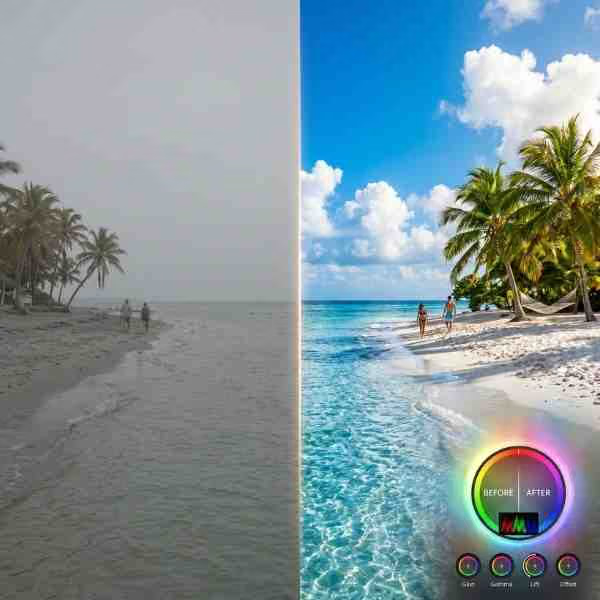
For editing and colour grading alongside the audio work, the Free Mega Cinematic LUT Pack includes 22 LUTs in .cube format for After Effects, Premiere Pro, DaVinci Resolve, and Final Cut Pro.
The Free After Effects Glitch Transition Presets pair particularly well with the sci-fi pack, with a glitch cut timed to the hull breach crack or the communication signal loss creating the kind of moment that defines a cinematic sequence.
For generating and enhancing the visual content, OpenArt AI handles the image generation and Magnific enhances the surface detail quality before animation.
Download the full Sci-Fi Space Station Sound Effects AI Prompt Pack free from Freevisuals
Disclosure: This post contains affiliate links. If you purchase through these links, Freevisuals may earn a small commission at no extra cost to you.
Download free video templates, LUTs, and presets for Premiere Pro, After Effects, DaVinci Resolve, CapCut, and Final Cut Pro.